A skincare quality agreement is the document that sits next to your commercial manufacturing contract and spells out who owns quality at every step — from incoming raw materials to final release, complaints and change control. It does not replace the supply agreement; it makes the quality responsibilities inside that relationship explicit so a problem does not turn into a dispute about whose fault it was.
What is a quality agreement, and why is it separate from the commercial contract?
The commercial contract covers price, volume, lead time and payment. The quality agreement covers whether the product is made, tested and released to a standard both parties accept. When those two are merged into one loosely worded document, the clauses that actually protect your brand tend to get lost. A separate, focused agreement forces the team to answer practical questions: who samples the incoming material, who signs off the batch, and who pays if a batch is rejected.
In practice, the quality agreement is where a brand defines the operating rules for a contract manufacturer. It is most useful before production starts, not after a problem appears. Smaller brands often assume the commercial contract is sufficient and skip this step, then discover the gap only when a shipment is held or a complaint lands. The document is inexpensive insurance against exactly that situation, and it is far easier to negotiate before any money has changed hands.
Who is responsible for raw materials and components?
This is the first clause to pin down, because it changes who carries the risk. If your brand supplies the active or the key raw material, you typically also own the risk that the material is off-spec or unstable in the formula. If the manufacturer sources everything, the incoming verification and its consequences usually fall on them.
The agreement should state what documentation travels with each material — certificates of analysis, specifications and, where relevant, allergen or regulatory statements — and who re-tests if a result looks wrong. Leaving this implicit is a common source of friction.
How do you define batch acceptance and release?
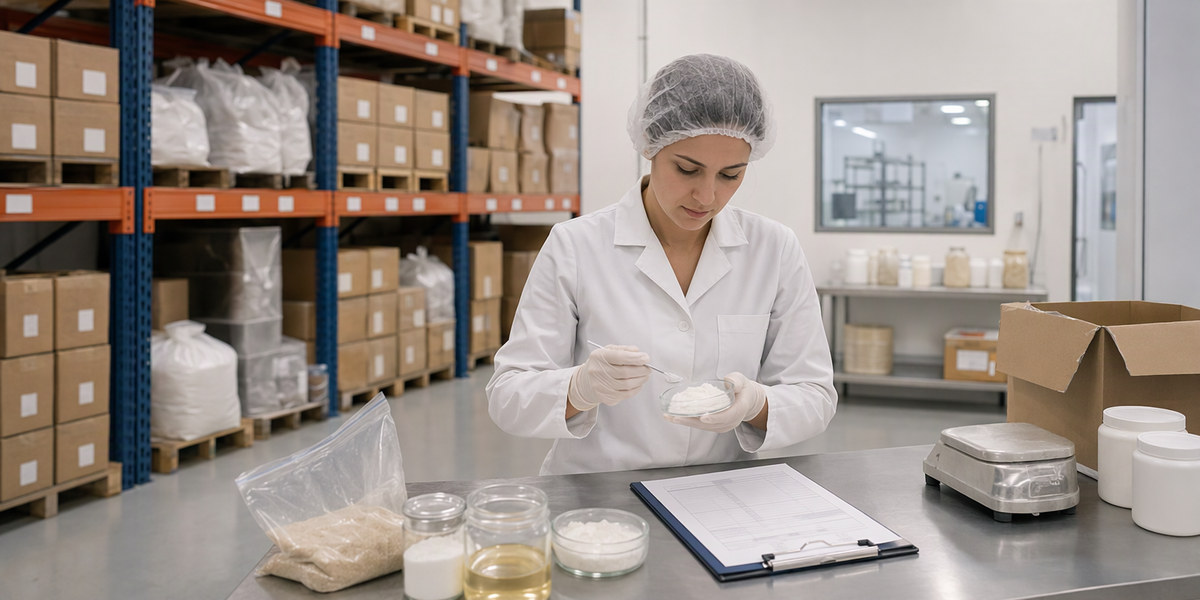
Acceptance should be defined as a concrete plan, not a feeling. The agreement needs an agreed sampling method, the documents the manufacturer must provide with each batch (a COA is the baseline), and who performs the final release decision.
| Element | Typical owner | Why it matters |
|---|---|---|
| In-process checks | Manufacturer | Catches deviations while the batch is still adjustable |
| Finished-product COA | Manufacturer issues, brand reviews | Evidence the batch met specification |
| Release decision | Defined per contract | Clarifies who can ship the product |
| Retained sample | Usually manufacturer | Reference if a complaint arrives later |
The sampling plan is something the two parties set together. Stating a fixed acceptance number in an article would be misleading; the point is that the number must be agreed and written down, not assumed.
What happens when a batch fails or a complaint arrives?
A good agreement names a procedure before there is a failure. It should say who leads the investigation, how a non-conforming batch is quarantined, and how the cost of rework or destruction is allocated. A common pattern is that process failures sit with the manufacturer while issues traced to an approved formula or brand-supplied material sit with the brand — but that allocation only holds if it is written into the contract.
It should also cover complaint handling: who receives the report, what timeline applies, and what records each side keeps. This is where the quality agreement connects to the market’s expectations for a responsible party or filer, without pretending the agreement itself changes the law.
Which clauses protect your brand during change control?
Change control is where quiet modifications become expensive surprises. The agreement should require written approval before any change to formula, packaging, process or supplier. A manufacturer that swaps a raw-material supplier or adjusts a process without notice can invalidate your stability data and your market documentation.
Define what counts as a minor change versus a change that requires re-validation or fresh regulatory updates. The more clearly this is drawn, the fewer arguments later.
What documentation should the agreement secure?
Beyond the COA, the agreement should secure ownership and access to the records a brand needs to sell the product: batch records, stability data, and the certificates required for market entry. If your product is registered or notified through a responsible person or local filer, those parties will expect the underlying quality records to be available on request.
State who holds the originals, how long they are retained, and whether the brand can obtain copies for audits or registrations. View this as a practical right, not a formality. Where records are stored electronically, confirm the brand can access them without delay when a regulator or customer asks, rather than waiting on a manual file search.
What should a brand verify before signing?
Before you sign, confirm a short list of points rather than trusting the relationship to carry them:
- Raw-material responsibility is assigned per item, not left generic.
- Batch acceptance, sampling and release are written as a procedure.
- Failure, rework and complaint costs are allocated in plain language.
- Change control requires your written approval first.
- Quality records are accessible for the markets you actually sell in.
If any of these is missing, the agreement is a letter of intent, not a control. Requirements differ by market, product type and claim, so confirm the applicable expectations for each destination before finalizing the document.
If you are scoping a contract manufacturing partnership and want the quality agreement drafted against your actual formula, packaging and target markets, our technical team at CHONGSHENG FUTURE can review the responsibilities with you so the commercial contract and the quality framework line up before the first batch runs.