Selling skincare on Amazon is less about writing a clever listing and more about documentation, labeling and claim discipline. To list a product, a brand usually needs to satisfy two separate layers: Amazon’s own category and seller policy, and the cosmetics regulation of every market it ships to. Getting both right before launch is what "Amazon skincare compliance" really means.
For a founder weighing channels, the work looks more like a documentation project than a marketing one, and starting it late is a frequent reason a launch slips.
What does Amazon skincare compliance actually cover?
There are two layers, and they are easy to confuse. The first is Amazon’s policy: the Beauty and Personal Care category is gated in many situations, and sellers may need category approval plus product information that meets the marketplace’s expectations. The second layer is the law of the target market — for example U.S. FDA expectations, the EU’s cosmetic framework, or the UK’s post-Brexit system. Amazon enforces its own policy, but it does not certify that a product is lawful or safe; that responsibility sits with the brand and its regulatory setup.
How does Amazon separate cosmetics from drug claims?
This is where many new sellers trip up. Under the U.S. framework, a product intended to cleanse or beautify is generally a cosmetic. A product intended to prevent disease or affect the body’s structure or function is generally regulated as a drug. Sunscreen (SPF) and acne products that rely on certain over-the-counter active ingredients fall into the drug category, not cosmetics, which changes the paperwork both Amazon and the regulator expect. The practical takeaway: keep cosmetic claims at the appearance and sensory level — cleanse, moisturize, help improve the look of uneven tone, support the skin’s natural barrier — and avoid statements that imply the product works like a medicine.
Which documents do you need before listing?
The exact set depends on the market, but the table below shows the typical starting points. Requirements also differ between a simple moisturizer and a product with active ingredients, so view the list as a baseline rather than a finish line. These are planning references, not a substitute for confirming the current rules with the relevant authority.
| Market | Typical requirements |
|---|---|
| United States | Facility registration and product listing under the U.S. cosmetics law (MoCRA), FDA establishment details, a Certificate of Analysis (COA), and labeling that follows federal cosmetic rules. |
| European Union | CPNP notification, a Responsible Person established in the EU, a Product Information File (PIF), and labels in the language of each member state where the product is sold. |
| United Kingdom | A UK Responsible Person and UK product notification (SCPN), plus UK-format labeling, since the UK runs its own system after Brexit. |
Requirements shift by product type and by what you claim, so confirm the specifics for each market before you commit to a launch date.
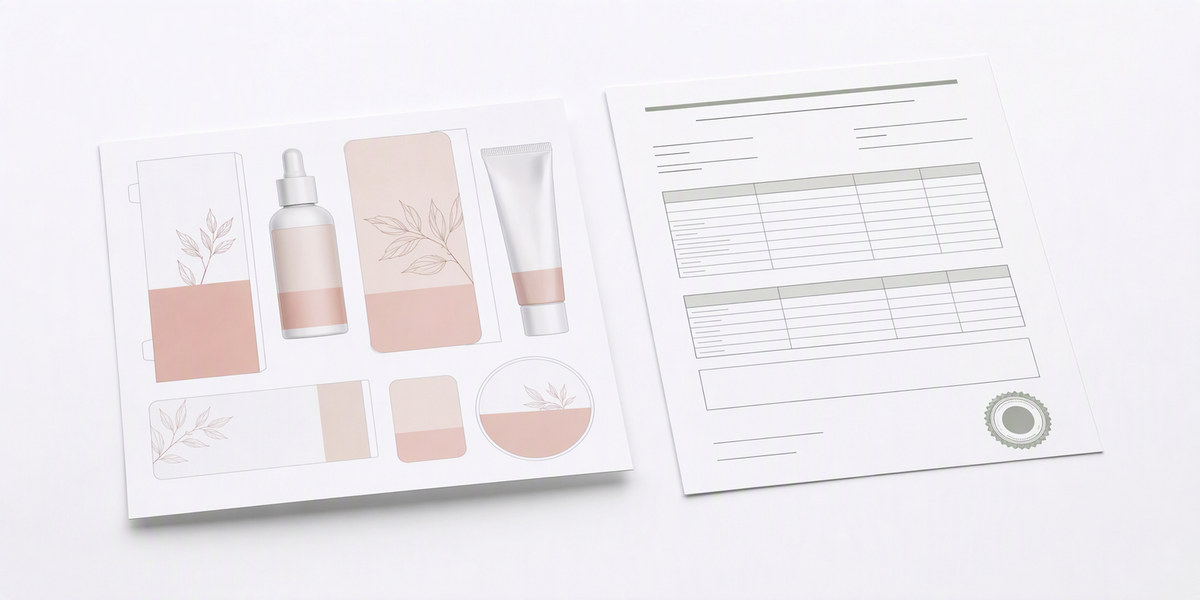
What labeling details does Amazon check?
Reviewers and regulators look for the basics done correctly: INCI ingredient names, net content, the responsible person or manufacturer address, country of origin, and any required warnings. For the EU, the label must be in the local language. Country-of-origin marking also matters for cross-border fulfillment, especially when inventory moves between regions before reaching the customer. Missing or inconsistent details are a common reason a listing gets held or suppressed, so the label is worth getting right early rather than after a rejection.
Which claims will get a listing suppressed?
Amazon removes or restricts listings that cross into drug or medical territory. Watch out for statements that a cosmetic can address a skin condition, claims of "antibacterial" or "antimicrobial" benefits on a cosmetic, an SPF claim without the corresponding sunscreen-drug registration, or before-and-after language that implies a medical result. Keep the message on what the product does cosmetically: it cleanses, hydrates, protects, or supports the look of the skin. If a claim would need clinical proof to stand up, it likely belongs to a drug, not a cosmetic.
How early should you start the compliance work?
Compliance is not the last checkbox before a launch; it is part of the critical path. Market notifications, responsible-person agreements and label translation can each take weeks, and they often run in parallel with formula finalization and packaging procurement. Brands that leave compliance to a final step frequently find it becomes the bottleneck that delays the whole go-live. A simple rule: open the regulatory checklist at the same time you lock the formula, not after the first batch is filled.
How can a contract manufacturer support this?
A capable OEM/ODM partner can remove a lot of the guesswork. The manufacturer typically supplies the Certificate of Analysis, batch records and formulation documentation, and can provide the INCI list, stability data and other inputs a brand needs for its PIF or notification file. What the manufacturer does not do is carry the brand’s regulatory responsibility — the Responsible Person, the notifications and the final compliance call remain with the seller. Asking the supplier early which markets its existing documentation already covers can save weeks of rework later. The efficient path is to agree on the target markets and claims early, so the documentation is built for the right markets from the start.
If you are planning a skincare line for Amazon and want to map the documentation and claims to specific markets before sampling, our technical team at CHONGSHENG FUTURE can walk through the requirements with you as part of an OEM or ODM program, so the paperwork and label decisions are aligned before the first batch is filled.