Comparing quotes from skincare contract manufacturers comes down to one rule: compare like for like. A lower unit price means little if the scope, packaging, testing and market-compliance work behind it are different. The question that actually helps is not "who is cheapest" but "what exactly is each quote covering, and what will it cost to reach a shippable, compliant product."
Most buyers start by lining up the unit prices, then discover the quotes are not describing the same product. That mismatch is the main reason supplier comparisons go wrong, and it is easy to miss when the headline numbers look close.
What does a skincare manufacturing quote usually include?
A contract manufacturer’s quote is rarely a single number. It is a bundle of line items that reflect formulation, packaging, testing and logistics. Knowing the usual components helps you spot what is missing before you sign.
| Line item | What it covers |
|---|---|
| Unit price | Usually tiered by order volume; the per-unit rate tends to drop as quantity rises. |
| MOQ | The minimum order quantity, often driven by packaging and batch economics rather than the formula itself. |
| Tooling / mold fee | A one-time cost for custom bottles, jars or decoration when stock packaging is not used. |
| Sampling & formula development | Cost to develop and adjust the formula before production begins. |
| Testing | Stability and preservative-efficacy (challenge) studies, which commonly run for several months. |
| Packaging & artwork | Component procurement plus label and carton design or setup. |
| Freight & terms | Shipping, insurance and duties, which depend on the Incoterm (EXW, FOB, DDP) and are often outside the factory price. |
A quote that leaves out testing, packaging or compliance setup is not necessarily misleading — it may simply be scoped differently. Your task is to find out what is and is not included.
If a quote looks unusually low, check whether the MOQ fits your launch plan. A very low unit price tied to a high MOQ can leave you holding inventory you cannot sell, which is a different kind of cost. The number should match your go-to-market volume, not just look good on paper.
Why can two quotes look similar but cost differently?
Two proposals can show a close unit price and still lead to very different total cost. The gap usually comes from scope that is not visible on the first page. The pattern repeats across categories: the headline price is the easiest part to compare and the least useful on its own.
- Packaging choice. Custom molds raise the upfront cost but can lower the per-unit price at volume; stock packaging avoids tooling but may limit differentiation.
- Testing scope. Stability and preservative-efficacy work are commonly part of quality substantiation and add both time and cost, yet some quotes list them as optional.
- Reformulation rounds. If the first formula misses the brief, each adjustment adds development time and cost beyond the initial fee.
- Market-compliance work. Placing product in the EU commonly involves a Responsible Person, a Product Information File and CPNP notification; the US commonly requires FDA facility registration and MoCRA-related obligations. These vary by market and should be confirmed, but they affect the true cost to launch.
- "Free" offers. Free sampling or tooling may be tied to a production commitment, so read the condition before counting it as a saving.
How should you normalize quotes before comparing?
Before putting two numbers side by side, align the assumptions so you are comparing the same product.
- Same formula and concentration, or at least a clearly described equivalent.
- Same packaging: stock versus custom, with matching decoration and component quality.
- Same order quantity, because MOQ and volume tiers change the unit rate.
- Same testing package, stated explicitly (stability, preservative efficacy, any claim support).
- Same Incoterm and delivery point, so freight and duties are comparable.
- Same target-market compliance scope, listed as line items rather than assumed.
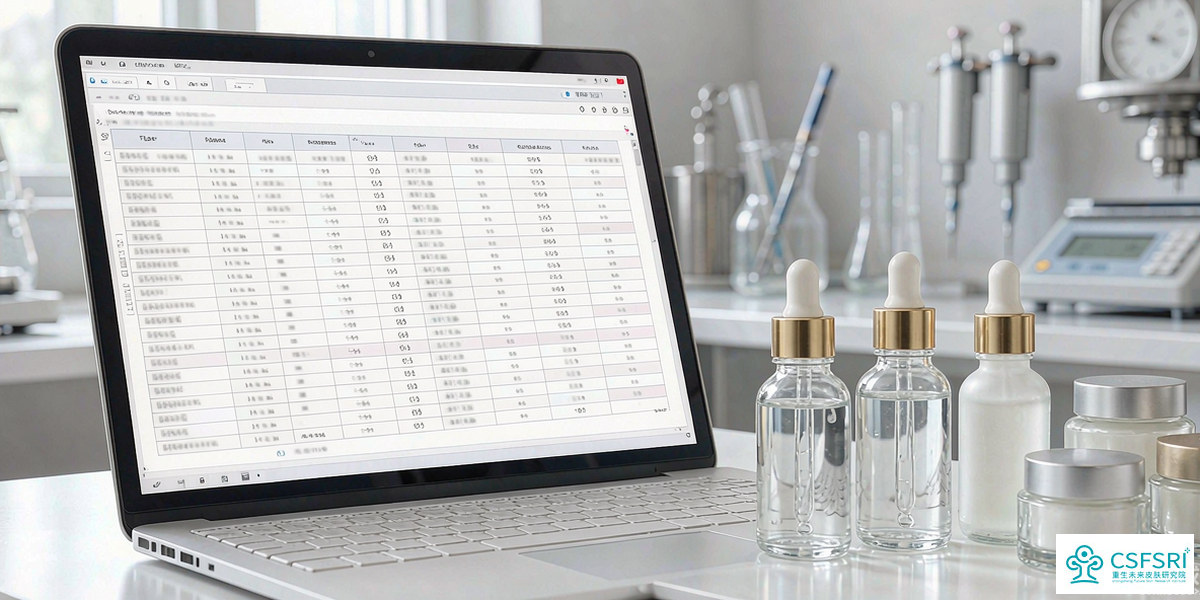
Only after these are matched does the unit price become meaningful. A cheaper quote that excludes testing or compliance is not cheaper — it is incomplete. Document the answers in a single comparison sheet so the differences stay visible as you decide.
What should you ask beyond the price?
The number tells you little without the context around it. A quote is a starting point for a conversation, not a final answer, so it helps to ask the same set of questions of every supplier:
- What is the real MOQ for my packaging, not a generic catalog number?
- Are stability and preservative-efficacy tests included, and what is the timeline?
- Who owns the formula and the usage rights after development?
- If the first batch fails a test, who pays for the re-run?
- What are the payment terms and the deposit schedule?
- Which market documentation is included, and what must I arrange separately?
Which factors matter more than unit price?
A capable partner with a slightly higher unit price often costs less in total than a low price that produces delays, rework or compliance gaps. The items below are where that difference usually shows up.
| Factor | Why it affects total cost |
|---|---|
| Quality system | Fewer batch failures and recalls reduce hidden cost. |
| Technical depth | Strong formulation support shortens the sampling stage. |
| Lead-time reliability | Predictable schedules protect your launch date. |
| Communication | Clear responses prevent costly misunderstandings. |
| Market experience | Familiarity with your target market reduces compliance risk. |
A few signals are worth weighing before you decide: a quote that refuses to itemize, a supplier that cannot explain its testing timeline, or a price that sits far below the others without a clear reason. None of these is automatically disqualifying, but each is a prompt to ask one more question.
If you are scoping a private label or OEM/ODM skincare line and want to pressure-test supplier quotes against real production constraints, our technical team can review the scope with you and help you compare options on the same basis.