Only a narrow set of claims survives scrutiny. A brand can position a product around broad-spectrum sun protection that also covers visible light, around oxidative-stress management, and around helping improve the appearance of uneven tone. What does not survive is any promise that a topical product blocks or prevents blue-light damage from screens — the evidence simply is not there, and there is no standard test that can certify such a claim.
This article walks through the evidence tier by tier: what blue light (HEV) does to skin, how screens compare with sunlight, why no standard test exists, which formulation logic is supported, and how to word claims that hold up under review in your target market.
What does the evidence say about blue light (HEV) and skin?
HEV — high-energy visible light — covers roughly the 400–500 nm band of the solar spectrum. When people say "blue light," this is the range they mean, and sunlight is its dominant source.
The research splits into two very different evidence tiers:
- Pigmentation response — reasonably supported. Visible light can induce or worsen hyperpigmentation, and the link with melasma is fairly consistent in the literature, particularly in deeper skin types. This is the strongest reason to take visible light seriously in a photoprotection product.
- Device-induced skin aging — thin evidence. The claim that screens cause meaningful skin aging is not well supported. A review in the Journal of Cosmetic Dermatology concluded that no topical product has been convincingly shown to prevent aging or hyperpigmentation from device blue light.
For a brand owner, the practical reading is straightforward: visible light is a legitimate formulation target because of its role in pigmentation, not because of screens.
How much blue light comes from screens compared with sunlight?
Sunlight is the primary source of HEV exposure, and screen exposure sits orders of magnitude below it. That gap matters for positioning, because several popular claims are built on exposure numbers that no literature supports.
The widely circulated idea that screens account for a large share of skin aging — the "60% of aging" line is the most common version — has no solid literature behind it. It should not appear in any claim, product name, or campaign. If a marketing team wants to use it, the honest response is that it fails on the evidence, and repeating it exposes the brand to challenge in markets that police misleading claims.
There is a constructive way to use the same insight: a consumer who already applies broad-spectrum sunscreen for UV is already addressing most of their blue-light exposure, because the sun dominates it. The incremental story is visible-light coverage and oxidative-stress support — not "screen defense."
Why is there no standard test for "blue-light protection"?
There is no standardized test method for blue-light protection. That absence is not a technicality; it changes how a brand should build and defend a claim.
Established methods exist for the components a serious product can be built on: UV protection is measured through recognized sunscreen testing methods, antioxidant capacity can be assessed with established in-vitro assays, and pigmentation endpoints are evaluated with standard clinical approaches. But no single report can certify "blue-light protection," because the endpoint itself is not standardized.
This means substantiation has to be assembled from evidence tiers rather than bought as one certificate:
- Measured protection — UV and, where relevant, visible-light coverage from the formula’s filter system, including iron oxides.
- Mechanistic support — antioxidant capacity of the formula, framed as oxidative-stress management rather than a promise to undo damage.
- Appearance endpoints — improvement in the look of uneven tone, evaluated with accepted clinical methods and worded at the appearance level.
When a supplier offers a "blue-light test report," the right question is what endpoint it measured and against which method. If the answer is vague, regard the report as marketing material, not evidence.
What formulation logic does the evidence support?
The defensible architecture has three layers, each doing a different job:
| Layer | What it does | Evidence strength | Notes for the brief |
|---|---|---|---|
| Broad-spectrum sunscreen | Protects against UVB and UVA, the primary drivers of photo-induced damage | Well established, with standard test methods | The non-negotiable base of any light-protection product |
| Iron-oxide tinted sunscreen | Extends protection across the visible spectrum, including the HEV band | Supported by the visible-light pigmentation literature | Tint shade and level must be managed for cosmetic elegance |
| Antioxidant support | Supports the skin’s defense against oxidative stress from environmental exposure | Mechanistically reasonable, endpoint-dependent | Frame as oxidative-stress management, not damage reversal |
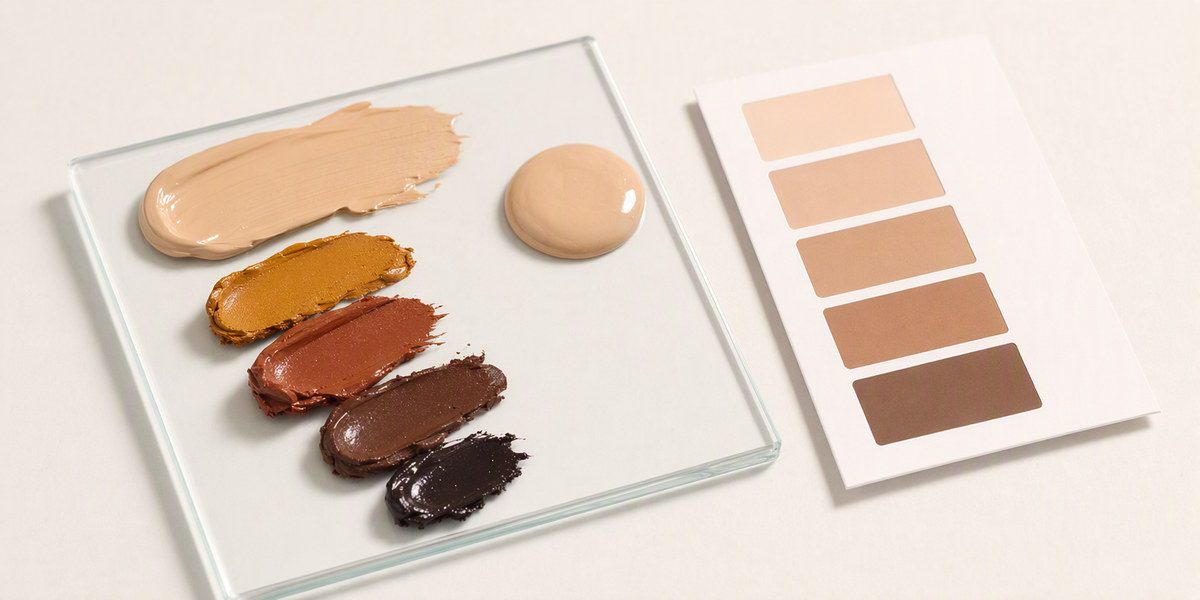
Two practical consequences follow from this architecture. First, the sunscreen system carries the claim; antioxidants and other supporting actives refine the positioning but cannot replace filters. Second, because the strongest visible-light data sits in pigmentation — particularly for deeper skin types — a tinted, iron-oxide format is the most credible way to make the category real rather than rhetorical. If you want to understand the boundaries of the sunscreen layer itself, our guide on what you can actually claim about SPF covers filters, testing methods and regulatory boundaries in detail. For the antioxidant layer, the formulation guide on how to formulate with ergothioneine is a useful reference on stability, concentration and claim wording.
What claims can a brand actually make?
Claim requirements vary by market, product type and wording, so the table below is a starting point for your regulatory review, not a substitute for it.
| Defensible direction | Example wording | What to avoid |
|---|---|---|
| Broad-spectrum protection | "Broad-spectrum UVA/UVB protection" | Implying total or complete protection |
| Visible-light coverage | "Helps protect against the visible-light component of sun exposure" | "Blocks blue light" or "blue-light shield" |
| Oxidative-stress management | "Helps support skin’s defense against environmental oxidative stress" | "Undo blue-light damage" or "reverse screen aging" |
| Appearance of tone | "Helps improve the appearance of uneven tone" | Any disease-related or medical wording |
Two boundaries deserve emphasis. Appearance-level wording ("helps improve the appearance of uneven tone") is a different category from a pigmentation-disorder claim, and only the first is available to cosmetics. And any percentage or statistical promise — the kind that marketing teams love — needs substantiation you can produce on request; for blue light specifically, that substantiation rarely exists.
Claim discipline extends to the supporting actives in the formula. If your brief includes brightening ingredients alongside the photoprotection system, the claim boundaries in our guides on formulating with arbutin for skin brightening and on tranexamic acid in skincare show how concentration, stability and substantiation interact with wording.
How can a brand build this category on solid ground?
Three moves keep a blue-light positioning defensible:
- Build the product on evidence tiers, not on a concept. Decide which layer — filters, iron oxides, antioxidants — carries the claim, and make sure each layer’s role matches what its evidence supports. The product then stands on measured protection rather than on a marketing label.
- Align claims with evidence per market before artwork. The same wording can be acceptable in one market and misleading in another. Review proposed claims against the formula, the target market and the available substantiation while artwork is still flexible — after packaging is printed, corrections get expensive.
- Differentiate through formulation logic. In a category where everyone repeats the same screen-anxiety story, a product that can document its visible-light coverage, its tint system and its antioxidant approach stands apart on substance. Positioning for deeper skin types, where the visible-light pigmentation data is strongest, gives the range a clear and honest reason to exist.
Blue light is a real spectral band with a real — and specifically bounded — relevance to skin. Brands that respect those boundaries can build a credible light-protection range; brands that chase the screen-anxiety headline will end up defending claims they cannot support.
Where a manufacturing partner fits
Translating this architecture into a commercial product involves choices a brand should not make alone: filter system and SPF targets, iron-oxide levels and shade development, antioxidant compatibility, stability across the range, and claim wording that matches the final formula and each target market.
Our technical team can review your proposed claims against the product specification and target market before artwork is finalized, and support formulation development, sampling, testing coordination and production planning for a light-protection range. Share your target format, positioning and markets, and we can assess the formulation route with you before sampling begins.