"Clean beauty" has no single legal definition in the EU, so the first job for any brand is to decide what the term means for its own products. A credible clean beauty line for the EU is built on a clear ingredient policy, claims that are truthful and substantiated, and manufacturing that meets the same baseline as any other cosmetic placed on the EU market under Regulation (EC) No 1223/2009.
What does "clean beauty" actually mean in the EU?
There is no EU law that defines "clean beauty," and no approved list of allowed or banned ingredients that the label implies. In practice, brands use the term to signal a positioning: fewer or more transparent ingredients, avoidance of certain substances, and often a preference for renewable or sustainably sourced materials. Because the phrase is not regulated, its meaning is set by each brand’s own policy, not by a legal standard.
That creates both an opportunity and a risk. The opportunity is that a brand can define clean beauty around its real formulation choices. The risk is that vague or absolute statements can read like claims the brand cannot support. Approach the term as a promise you can document, not a slogan.
For many brands the appeal is practical rather than regulatory: buyers and retailers increasingly ask for an ingredient philosophy they can understand and verify. A clear policy answers those questions before they are raised.
How is clean beauty different from "natural" or "organic"?
"Natural" and "organic" are also not uniformly defined at EU level for cosmetics, but they are closely tied to voluntary standards that do carry definition. Certifications such as COSMOS, NATRUE and Ecocert set documented criteria for natural and organic content, allowed processes and permitted ingredients. A brand can pursue one of these labels, or describe its products in its own words, but the wording must stay truthful.
A claim such as "natural" or "organic" should reflect what the product actually contains and how it was made. Describing a formula as natural does not change the underlying safety or compliance duties under EU cosmetics law.
Which claims need extra care under EU rules?
EU cosmetics claims are assessed against common criteria: they must be lawful, truthful, substantiated, honest, fair and identifiable as a claim. Two points matter most for a clean beauty positioning.
- Free-from claims. A "free-from" statement about a substance that is already prohibited in EU cosmetics is generally considered misleading, because the product could not legally contain it anyway. Free-from claims are most useful when they refer to substances that are allowed but that your formulation deliberately avoids.
- Substantiation. Every claim, including implied ones, should be backed by evidence appropriate to the statement. "Clean" on its own is a positioning; the specific claims around it — a non-comedogenic feel, a refreshed appearance, a lightweight texture — still need support.
Keep claims tied to what the product does for the appearance or feel of skin, and avoid wording that implies a therapeutic or preventive effect.
What should your ingredient policy cover?
A written ingredient policy is the backbone of a defensible clean beauty line. It lets your team, your manufacturer and your buyers answer the same questions consistently.
| Policy area | What to define |
|---|---|
| Restricted substances | The ingredients you avoid, and the reason — regulatory, supplier data, or brand choice |
| Disclosure | How much of the formula you publish, and whether fragrance components are named |
| Sourcing | Renewable, certified or traceable materials, where relevant to the claim |
| Documentation | Certificates of analysis (COAs), specifications and supplier statements kept per batch and per ingredient |
The policy does not need to be public, but it should be consistent. Buyers and retailers increasingly ask for it during onboarding, and a documented policy is also the fastest way to answer a retailer’s compliance questionnaire.
How does manufacturing support a clean positioning?
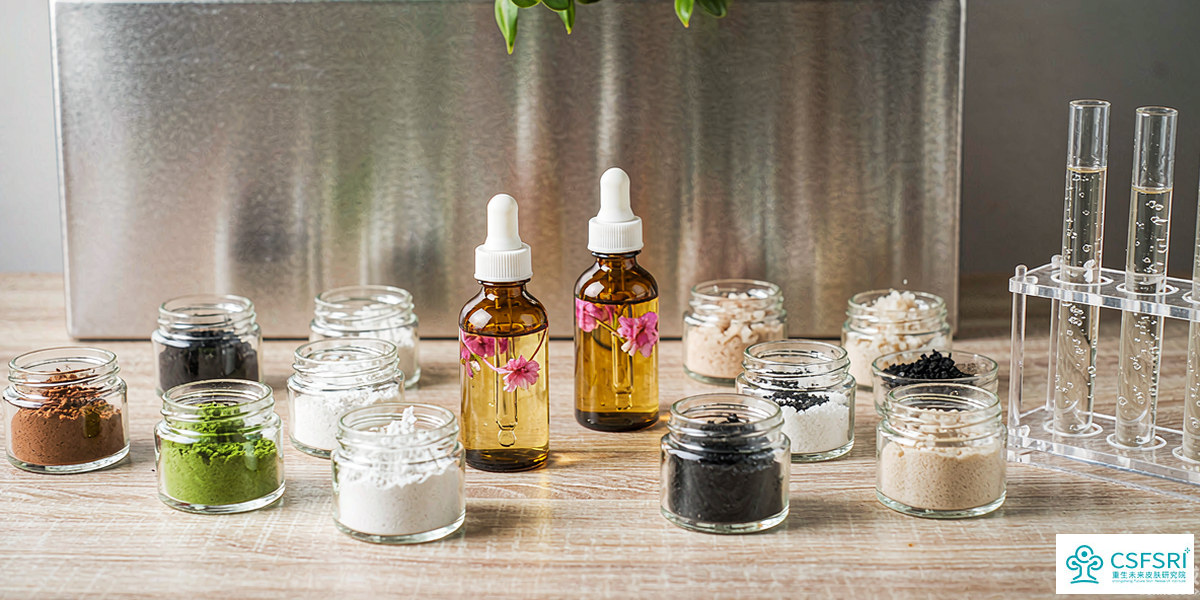
Manufacturing choices are where a positioning becomes real. A contract manufacturer working to good manufacturing practice, commonly documented through ISO 22716, helps keep batch quality consistent and traceable. What matters for a clean claim is the paper trail: supplier specifications, certificates of analysis, and change control so a formula cannot drift without review.
If your line emphasizes "free-from" certain preservatives or raw materials, the manufacturer’s incoming-material controls and segregation in production become part of how you prove the claim. Ask for documentation, not assurances, and confirm how the plant prevents cross-contact when a claim depends on it.
What should a brand verify before launch?
Before artwork is finalized, confirm a few basics so the positioning holds up:
- The product complies with EU cosmetics requirements, including responsible-person and notification steps, regardless of the clean positioning.
- Each claim maps to a piece of substantiation you can produce on request.
- Free-from statements refer to allowed substances you deliberately avoid, not to banned ones.
- Your ingredient policy and labels use the same wording.
- Any voluntary certification claimed is actually held for the product and market.
A common mistake is to assume the "clean" label changes the compliance baseline. It does not: the product still needs the same safety assessment, responsible person and notification as any other cosmetic. The positioning adds expectations on top of that baseline, not a shortcut around it.
Related reading
- What Does a Skincare Brand Need to Know About Halal Cosmetics Certification?
- How Should a Skincare Brand Formulate With Retinol? Stability, Concentration, and the New EU Limits
If you are planning a clean beauty line for the EU and want to pressure-test your ingredient policy and claims against real manufacturing and documentation constraints, our technical team at CHONGSHENG FUTURE (重生未来) can review them with you before sampling.