Cold-chain shipping for skincare is one of those topics that gets oversold and over-built. Most of the categories that travel across borders every week do not need it. A handful do. The job of this page is to put each formula on the right tier of cold-chain investment, and to keep the contract and packaging aligned with that decision.
The typical answer for most skincare orders is regular ocean freight with a short cool stay at the destination warehouse, not a full 2 to 8 degree end-to-end chain. Only a narrow set of formulas (high-activity vitamin C, retinoids, bioactive ingredients, lyophilised powders, fermentation-based skincare) actually justify any cold-chain logistics at all.
Do most skincare formulas need cold-chain shipping?
No. The bulk of what travels in containers under a brand label can sit at 15 to 25 degrees for the length of a normal ocean voyage without the formula moving meaningfully. Toners, serums, moisturisers, cleansers, sunscreens and most makeup formulas fall here. The packaging already protects against water vapour and oxygen, and the active systems inside are designed to survive that band.
What breaks the assumption is not the formula category but a handful of ingredient choices and packaging formats inside it. When the formula leans on one of those, cold-chain logistics starts to earn its place. When it does not, adding cold-chain usually only inflates cost and complicates the freight contract.
Which formulas actually justify cold-chain shipping?
Three groups show up most often in briefs where cold-chain comes back on the table.
- High-reactivity actives at the top of their range. Pure L-Ascorbic Acid at 10 percent and above, high-percentage retinoids, and concentrated AHA systems. Heat and ambient light accelerate oxidation and isomerisation. The shelf-life drop is visible inside the first few weeks of a hot container, not months later.
- Bioactive and fermentation-based ingredients. PDRN, recombinant collagen, multi-peptide blends at high loading, EGF-class growth factors, postbiotics, and similar raw materials. Stability data from these suppliers usually calls for a 4 to 25 degree band. Long exposures above 30 degree shorten the activity window; cool storage helps keep the claim honest.
- Lyophilised and freeze-dried formats. Lyophilised cakes and powders are solid, but they reabsorb moisture and lose cake integrity if the container warms and cools repeatedly. Cool ocean freight with desiccant and foil liners is the standard handling pattern.
Outside these three groups, regular temperature-controlled ocean freight (15 to 25 degrees, ventilation, light protection) is the working baseline. The cost of adding cold-chain sits on top of that baseline, and it only becomes a positive trade when the formula realises some of its value inside the cold-chain band that it would lose outside it.
What tiers of cold-chain are actually on the table?
Cold-chain is not a single setting. The decisions sit across four tiers, each with a different cost structure.
- Tier 1, regular ocean freight. Standard 15 to 25 degree ventilation, no active temperature control. Works for the bulk of skincare SKUs. Cost lift compared to ambient road freight in the same lane is negligible.
- Tier 2, reefer container with set-point adjustment. Refrigerated container with the temperature set in the 8 to 15 or 2 to 8 band, depending on the SKU. Adds a reefer surcharge per container and locks the liner into a tighter route. Common for cosmetics heading to warm-climate destinations or for reformulations that have already narrowed the stability window.
- Tier 3, passive cold pack for air freight. Foam box, EPS liner, phase-change ice packs, vacuum insulated panel, plus a USB temperature logger. Keeps 2 to 8 degree for 24 to 72 hours. Used for high-value sample shipments, restocks, or regional air freight where cold-chain has to live inside one or two transit days.
- Tier 4, active cold-chain with monitored freight. Refrigerated truck, real-time temperature and humidity logger, route planning around transit time. Rare in cosmetics. Reserved for clinical-grade, prescription-grade, or biological SKUs.
Most B2B orders stay in tier 1 or 2. Tier 3 appears in samples, influencer seed kits, and short shelf-life restocks. Tier 4 belongs to a different product category.
How does the contract split the responsibility?
Three parties usually touch a cold-chain order, and the contract should put each one on a clearly defined segment of the trip.
- Contract manufacturer (or self-operated factory). Owns the segment from the bulk batch release to the loading of the container or air pallet. Typically responsible for warehouse temperature, the hold test before loading, and the data logger that starts at the loading bay.
- Freight forwarder or 3PL. Owns the segment from container yard to destination warehouse. Responsible for the reefer set-point, the transit monitoring, the handover document, and the chain-of-custody log when the container is plugged in at port.
- Brand and overseas warehouse. Owns the segment from the destination port to the shelf. Responsible for intake inspection, end-to-end logger download, and the disposition decision when the logger shows a breach.
Two items tend to settle most disputes. First, end-to-end temperature data, not a paper claim from the forwarder; second, a pre-agreed rule for what counts as a breach and what the remedy is (refund, replacement, accelerated remediation). Both belong in the contract before the first shipment leaves.
What does the packaging actually have to do?
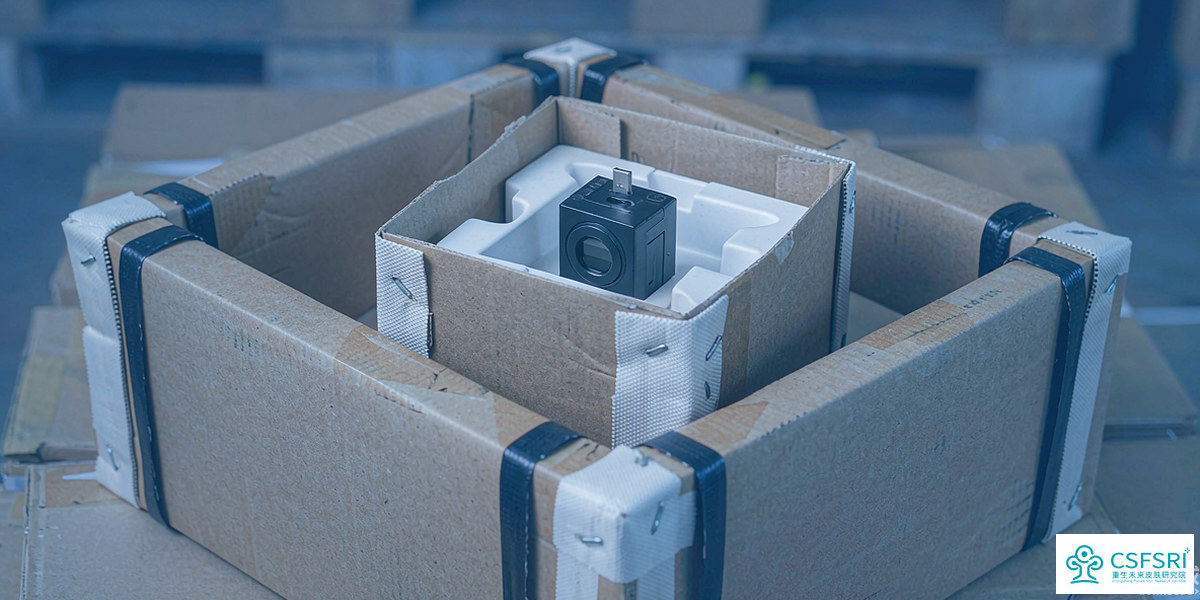
Cold-chain packaging is not just the cold source. Four layers usually show up in a tier 3 setup.
- Outer transport pack. Double-wall corrugated with edge protectors, sized so the cold packs sit fully around the inner product case without crushing the units.
- Insulation. EPS foam liner, vacuum insulated panel for tight windows, or a layer of reflective foil wrap. The selection drives how long the cold pack holds its set-point.
- Cold source. Phase change material packs at 4 degree for tier 3, dry ice or gel packs for shorter hops. Dry ice is a hazardous material on its own; this is where the dangerous-goods lane (covered in a separate article) intersects with cold-chain.
- Monitoring. USB single-use temperature loggers for tier 3, real-time Bluetooth or cellular loggers for tier 4. The logger placement matters as much as the brand of the device; one per case, near the warmest corner of the pack.
Cold-chain packaging at this level adds roughly 8 to 20 percent to the per-unit landed cost of a tier 3 order. Tier 2 reefer adds roughly 10 to 15 percent on top of regular ocean freight. The numbers move with lane and season, so they belong in a per-lane quote rather than as global defaults.
Where do cold-chain projects usually go wrong?
Three failure modes repeat across brands that set up cold-chain for the first time.
- Cold-chain because it sounds premium. Some brands add 2 to 8 degree cold-chain to all SKUs because the marketing story mentions "kept cold". The freight cost rises, the shelf life does not, and the line item becomes a drag on margins without a measurable return.
- Wrong tier for the formula. A formula that needed reefer got dry ice in a foam box, or a formula that only needed cool storage got a full active cold-chain. Both directions lead to either stability issues or excess cost.
- No logger handoff rule. The forwarder hands over the container, no logger data is checked at intake, and a breach is only found when the product is already on the shelf. The contract dispute is harder to settle because the data trail stops at the port.
How do we usually scope cold-chain for a new brief?
The decision tree for most clients lands in similar places.
Start with the formula. If the active system is one of the three groups above (high-reactivity actives, bioactive or fermentation-based systems, or lyophilised formats), cold-chain belongs in the conversation. If it is not, default to regular ocean freight plus destination-warehouse cool storage and stop there.
Pick the tier from the formula and the destination, not the other way around. Tier 2 (reefer) for warm-climate or long-lane deliveries of high-reactivity formulas. Tier 3 (passive cold pack with air freight) for samples, restocks, and high-value short shipments. Skip the marketing pull toward tier 4 unless the SKU is clinical-grade.
Put the responsibility split and the logger handoff into the contract before the first order. End-to-end temperature data is the cleanest way to settle any cold-chain dispute; the data should live with the brand from intake.
For brands that want help moving from a cold-chain question to a tiered rollout, our OEM team can line up the formula, the tier recommendation, and the cold-chain packaging together.