A skincare ampoule is a small, sealed, single-shot or short-course container of high-activity serum. The format earns its place when the active is unstable enough that a regular dropper bottle loses too much of it before the customer reaches the bottom of the bottle, and when the price band can carry the extra packaging cost. Picking the format because it looks high-end, without checking either of those two conditions, is how ampoule projects usually drift off schedule.
Below is how we help B2B clients decide whether ampoule is the right format and, if so, which type of container and which actives to put in it.
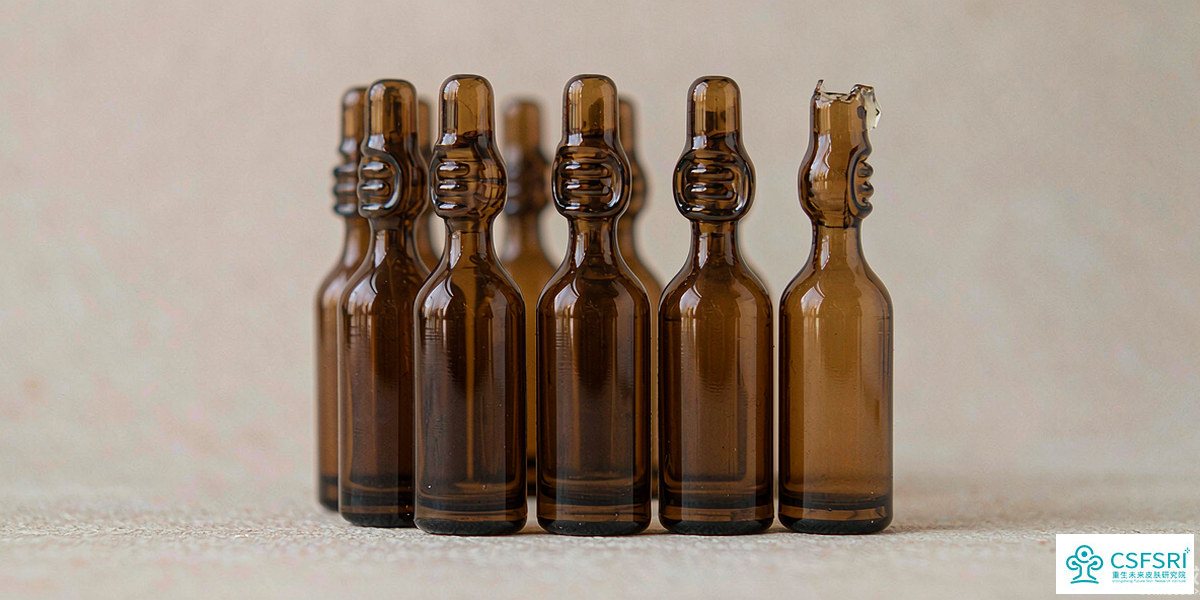
What makes a product an ampoule in the first place?
The format combines three design choices into one SKU. Pull any one of them out and the product stops reading as an ampoule.
- High activity per dose. Active concentration runs higher than the brand’s daily serum in the same category. Often a single active dominates the formula, and supporting ingredients are tuned around it.
- Tight, sealed packaging. Glass ampoules, sealed vials, or twist-off plastic tubes. Each variant keeps oxygen and contamination exposure low, which is the whole point of the format.
- Short course of use. Either a single-shot container or a small bottle the customer finishes in days, not months. The format expects to be used up, not stored.
Drop any one of these three and the SKU stops being an ampoule. A 30 ml dropper bottle with a standard concentration is just a serum, no matter how thin the bottle is. A small bottle with a low concentration is an overpriced sample. The format works only when all three hold together.
Which actives actually earn an ampoule?
Most actives do not need the format. The list of candidates is shorter than the marketing copy suggests.
- L-Ascorbic Acid (pure vitamin C). Highly reactive, oxidises fast, prefers low pH. A sealed ampoule keeps the active from turning yellow-brown before first use.
- High-strength retinoids. Concentrations above 0.5 percent behave poorly in long shelf-life bottles. Ampoule packaging suits a 7 to 14 night course, which is how retinoid ampoules are usually sold.
- High-concentration alpha hydroxy acids. AHA peels and concentrated exfoliating serums. The ampoule frame works for a short weekly or monthly course.
- Multi-peptide blends at high loading. Stability depends on solvent and packaging; sealed ampoules protect the blend from oxidation and from hydrolysis during use.
- Concentrated plant actives. Centella asiatica, tranexamic acid, Ectoin and similar branded ingredients often show up in ampoules because the marketing story calls for a higher number on the label.
The actives that do not work as ampoules are the ones that are already stable in regular dropper bottles. Niacinamide at 2 to 5 percent, glycerin-based hydrators, ceramide blends, and most moisturiser serums do not need the format and only add packaging cost.
Which container fits which active?
Three formats cover most of the B2B briefs we see. Each one trades cost for stability in a different direction.
- Glass ampoule (break-off top). Single-shot, the tightest seal in the category. Suited to the most reactive actives. Drawback: cost (glass forming, break-off tooling, transport breakage), no customer-controlled dosage.
- Sealed glass or plastic vial. Multi-shot (10 to 30 ml), usually with a rubber stopper or screw cap. Lets the customer pull a controlled dose each time. Slightly higher oxygen ingress than a true ampoule but still tighter than a regular dropper bottle.
- Twist-off plastic tube. Lowest cost per unit, easier to ship, less likely to break in the supply chain. Suited to plant extracts and lower-strength actives where some oxygen exposure is tolerable. Sealing is weaker than glass, so the active list narrows.
The cost spread runs roughly from highest (glass ampoule) to lowest (twist-off plastic). The stability spread runs the same direction. Picking a format because it is cheap without also adjusting the active tends to produce an ampoule that is just an overpriced small bottle.
How does the formulation change?
An ampoule formula usually looks leaner than a daily serum in the same category. Three formulation habits come up often.
- pH and buffer. L-Ascorbic Acid runs in the pH 3.0 to 3.5 window with a buffer system that survives the few weeks of use. Retinoids sit around pH 5 to 6. AHA-based ampoules often sit at pH 3.5 to 4.0 to keep exfoliation work.
- Solvent system. Oil-soluble actives (retinoids, certain peptides, fat-soluble vitamins) prefer oil-rich or anhydrous bases. Water-soluble actives prefer water or water-glycerol blends.
- Preservative strategy. A single-shot glass ampoule can run lighter on preservatives. A multi-shot vial or twist-off tube still needs a full preservation system to protect the contents over the days of use.
Texture choices in an ampoule trade against the active story. A heavy, silicone-rich base fights the perception of a high-activity serum. Most briefs lean toward a near-water or oil-only texture that absorbs fast and leaves a light after-feel.
Where do ampoule lines usually go wrong?
The patterns repeat across briefs. Three failure modes show up most often.
- Format without actives. A small bottle with a low percentage of a mild active. The ampoule frame reads as marketing, the contents do not support it, and the line drifts toward being labelled as overpriced.
- Actives without format. A strong active in a regular dropper bottle. The active degrades over the weeks of use, and the customer sees a formula that "stopped working" around week three.
- Packaging that does not match the active. Glass ampoule for actives that do not need it. Plastic twist-off tube for a pure vitamin C serum. Either combination costs extra without buying extra stability.
How do we usually scope an ampoule project?
The decision tree for most clients lands in similar places.
Pick the ampoule format only when the active is reactive enough to need the seal, and the brand’s price band can carry the extra packaging cost. Pick glass ampoule when the active is at the most-reactive end (L-Ascorbic Acid, high-percentage retinoids). Pick sealed vial when the active needs oxygen protection but the customer benefits from a multi-shot container. Pick twist-off plastic tube only when the active list tolerates some oxygen ingress and the brand’s price band sits in the 5 to 25 USD per SKU range.
Match actives to format before matching actives to claims. Claim language that implies medical or therapeutic action sits outside cosmetic claims in most major markets, and ampoules tend to attract it. Phrase the line around high activity and short courses, not around results that read as treatment.
For brands that want help moving from an ampoule brief to a first production batch, our OEM team can line up the formula, the container tier (glass ampoule, sealed vial, or twist-off tube), and the stability program together.