A skincare sampling fee pays for formulation work, not for a bottle of product — and in most cases you can get it back, but only if the credit is written into the commercial terms before you pay. That is the short answer. What matters more than the fee itself is what the sampling stage is supposed to prove, because that is where a launch budget either gets protected or quietly leaks. This piece covers the cost and decision side: what the fee buys, when it comes back, what "free" usually costs you, and what to lock down before you sign anything off. The manufacturing side of turning an approved sample into a bulk order is a different problem set, covered separately in our guide to what changes when a formula moves to production.
What Does a Skincare Sampling Fee Actually Cover?
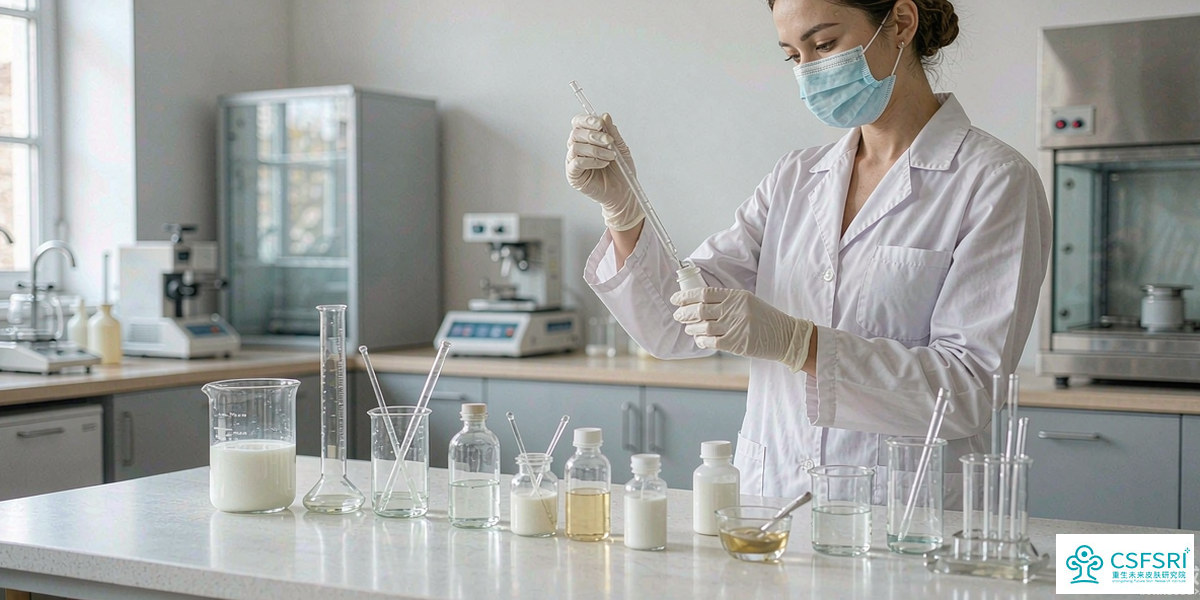
The assumption that a sample is cheap because it is small is where most first-time brand budgets go wrong. A few hundred grams of product can carry a higher cost per unit than a full batch, and not because of what is in the jar.
- Raw materials. Standard moisturising bases are inexpensive. Actives are not — peptides and similar specialty materials are priced by the kilogram at levels that make tiny trial batches uneconomic, and custom work often means buying material in specifically for your project.
- Formulator time. A sample that reaches you has usually been through multiple bench iterations, with preliminary checks on stability, preservation and skin feel along the way.
- Equipment. Homogenisers, emulsifying units and analytical instruments carry running costs whether the batch is two kilograms or two tonnes.
- Small-batch inefficiency. This is the counter-intuitive one. Line changeovers, cleaning and minimum charge weights mean a handful of units costs more per piece than volume production does.
- Packaging, if custom. Sampling into a bespoke component adds the component cost, and in some cases mould cost, on top.
- Freight, for cross-border samples.
Read this way, the fee is not a markup on a bottle. It is the price of running a development cycle — and the reason it does not scale down linearly with batch size.
Can You Get the Sampling Fee Back, or Skip It?
The industry norm is that sampling fees are credited or refunded once a qualifying bulk order is placed. Manufacturers describe this publicly in similar terms: fees credited toward the final balance once a mass production order is confirmed, credited in full against a first bulk order, or deducted from the final invoice when the initial production order is placed.
Two qualifications matter more than the norm itself.
First, it is a commercial policy, not an automatic right. The same sources attach conditions — according to the agreed commercial policy, for eligible projects, confirm this upfront. If the credit is not in writing before you pay, plan on the assumption that you will not see it again.
Second, the credit usually attaches to a real order. Sampling that is free or heavily discounted with no obligation attached often comes with a deposit requirement or a minimum quantity instead.
So the practical answer is that the fee is generally recoverable, but recovering it is a negotiation you have before the first sample is made, not after.
What Does "Free Sampling" Usually Mean?
Free sampling is real, and it is worth understanding what you are accepting when you take it.
In most cases free means a stock formula — a base the factory has already developed and produced many times. You are not paying for development because there is no development. For a brand testing a category or validating demand before committing budget, that can be a perfectly rational choice.
What you give up is differentiation. A stock base is available to other brands, which makes a price premium hard to defend and limits how specific your claims can be. Several manufacturers are candid on this point: samples offered at no cost tend to signal a generic, high-volume or promotional product rather than a developed one.
If your brand story depends on the formula being yours — a particular texture, a particular active system, a particular claim architecture — free sampling is not the saving it appears to be. It does not remove the cost, it moves it out of development and into differentiation, and differentiation is far more expensive to correct later.
What Should You Verify Before You Approve a Sample?
Treat sampling as four gates. If a supplier cannot clear the earlier ones, the later ones rarely improve on their own.
Before sampling — is this factory worth the time? Ask whether they run incoming inspection on raw materials and packaging, whether they test production water, whether filling areas are monitored, what their first-article inspection rule is, and whether they keep batch records and retention samples. Ask to see a blank exception-handling form. A factory that cannot produce one will not handle your problem well either.
During sampling — can they repeat it? Score the sample against a written acceptance sheet: appearance, odour, pH target, viscosity feel, absorption, finish. Then ask for a repeat sample made on a different day from the same formula version. Reproducibility is the entire point — a sample that cannot be made twice is not a standard. Lock a formula version code before anything moves toward bulk.
Before bulk — what paperwork exists? Request the INCI list, COAs for critical actives, MSDS where needed, a finished product specification covering pH range, viscosity range, appearance standard and microbial limits, the QC plan, and packaging specifications. When you receive a COA, ask whether the factory verifies those values with its own incoming testing, and what happens when a material fails.
Which specific tests you need, and how long each one takes, is a subject in itself — see our breakdown of skincare formula testing timelines.
On the first order — what protects you? Agree release criteria in writing, arrange pre-shipment inspection, and keep retention samples from each batch.
What Is a Golden Sample, and Why Does It Matter More Than the Fee?
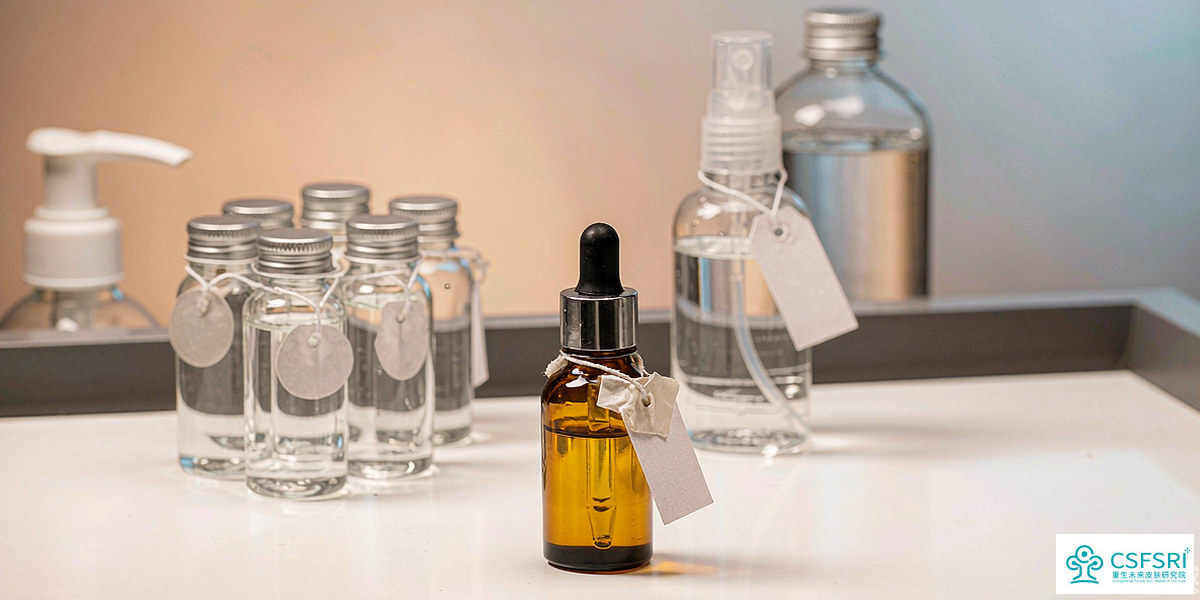
A golden sample is the physical, signed-off unit that defines your production standard. You keep one, the factory keeps one.
Its value is that it converts a subjective argument into an objective one. "Must match the sealed golden sample" written into a purchase order is enforceable in a way that "good quality" never is. Before signing off, confirm the sample matches your last revision feedback exactly, that the INCI list matches your packaging artwork, and that closure, fill and print are correct — this is the last point at which a change is cheap.
Sign off in writing, and treat that sign-off as a version lock. It is a recognised pattern in this industry for a formula to be quietly adjusted after approval, usually because a cheaper source was found for one material. Sometimes the change is harmless. Sometimes the emulsion separates in a warehouse three months later. A locked version code, a sealed reference unit, and an inspection measured against that reference are what prevent it.
How Should You Brief a Factory to Fewer Sampling Rounds?
Most sampling budgets are not spent on the first sample. They are spent on rounds four to seven, and those rounds are usually a brief problem rather than a chemistry problem.
Give the factory something measurable. A one-page brief with a viscosity target, a pH range, preservative constraints and a benchmark product turns three incomparable quotes into three comparable ones — and it signals that you are a buyer worth allocating engineering time to.
Describe sensory targets as comparisons rather than impressions. "Slightly heavier than the reference, absorbs faster, less oily after-feel" gives a formulator something to work toward. "The texture is not right" does not.
Structure feedback as keep, change, target: what stays, what moves, and what the next version should feel like. And agree how many revision rounds are included before you start — the gap between "one round included" and "unlimited revisions" is a conversation worth having early rather than at the fourth round.
Building a Sampling Plan With a Manufacturing Partner
Sampling is where a launch either de-risks or quietly accumulates risk. The brands that move quickly are rarely the ones who negotiated the lowest sampling fee. They are the ones who settled the specification, the version control and the sign-off standard before the first sample was made.
CHONGSHENG FUTURE (重生未来) works with brands on that sequence — a brief specific enough to quote against, sampling rounds with defined acceptance criteria, and a golden sample and release standard agreed before production begins. If you are weighing a sampling programme, send over your target market, product format and positioning, and we will tell you what is realistic before you commit to a batch.