Planning an eye care skincare line starts with one recognition: the skin around the eyes is not just "facial skin in a smaller jar." It is notably thinner than most other skin on the body, moves more from blinking and expression, and tolerates fewer irritants, so a credible eye product has to be planned around formulation, texture, claims and packaging from the start. The short answer is that you build an eye line the same way you build any skincare range, but with more conservative actives, lighter textures and more careful claim language.
What makes the eye area different from the rest of the face?
The periorbital skin is notably thinner than most other skin on the body and sits over a lot of daily movement from blinking and expression. It also has fewer oil glands than the cheeks, which is why the area feels drier and shows fine lines and shadows more readily. None of that means the eye area needs a different kind of science; it means it needs a more conservative version of the same science.
For a brand, the practical consequence is simple. You cannot take a face serum, dilute it slightly and call it an eye product. The eye contour expects lower concentrations of potent actives, lighter textures, and formulas that stay comfortable if they migrate toward the lash line.
Which formats and textures work for eye care?
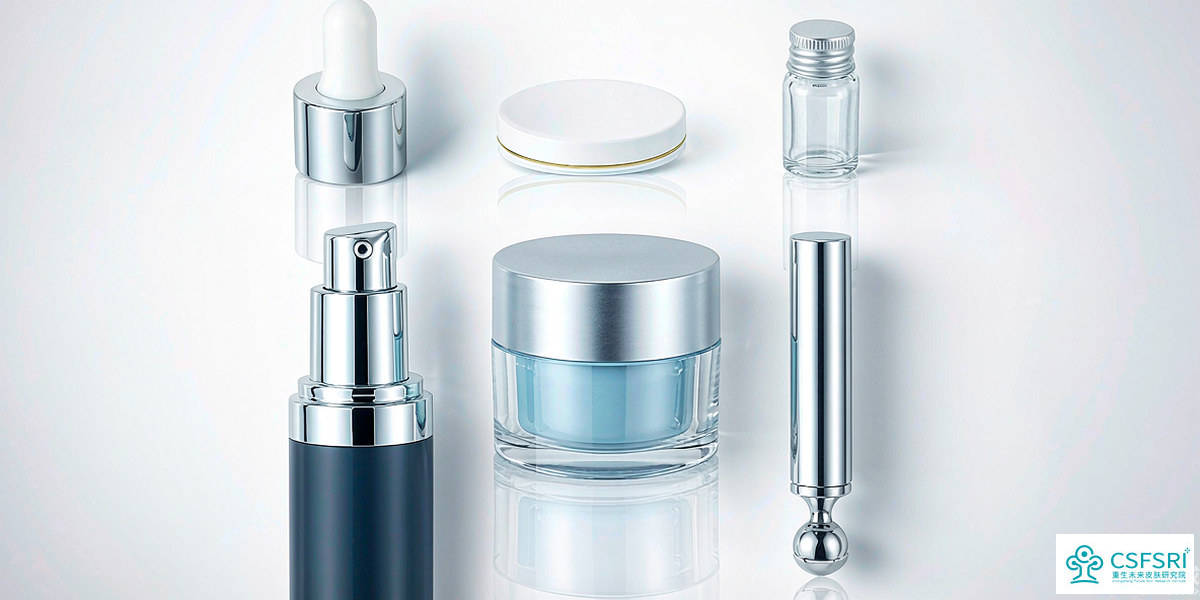
Eye products live or die on feel and dosage, not on a hero claim. The common formats each trade off differently:
| Format | Strength | Watch-outs |
|---|---|---|
| Small jar with spatula | Familiar, premium feel, easy to fill | User fingers introduce contamination; air exposure can affect preservatives |
| Airless pump | Better protection of sensitive actives, hygienic | Higher unit cost and tooling |
| Rollerball or applicator tip | Cooling sensation helps the look of puffiness, precise dose | More components; the cooling effect stays sensory, not therapeutic |
| Single-dose or capsule | Freshness per use, premium positioning | More packaging and higher cost per unit |
Texture usually lands between a light gel and a soft cream. A gel feels refreshing and suits the look of puffiness; a cream gives more comfort to dry, mature skin. Many brands ship one hero eye cream rather than a full range, at least at launch.

What ingredients are commonly used, and where are the limits?
Eye-area formulas lean on the same well-established ingredients as the rest of the face, used at considerate levels:
- Caffeine — commonly used to help the appearance of puffiness because it can influence how fluid looks under the skin.
- Peptides — formulated to support the look of firmness; they are cosmetic actives, not problem-solving products.
- Niacinamide and panthenol — used for comfort, even tone and barrier support.
- Hyaluronic acid and glycerin — for lightweight hydration without heaviness.
- Vitamin C derivatives — used to brighten the appearance of uneven tone and under-eye shadows.
The limits matter more than the list. High-strength retinoids, high-percentage acids and strong fragrance are usually pulled back or removed for the eye contour because the area tolerates them poorly. Keep the active story honest: these ingredients help the look of the area; they are not intended to address a medical concern.
How should you handle claims for eye-area products?
Claim rules for eye products vary by market, and claims that imply a fixed result rather than an appearance need more substantiation. Keep claims in the appearance and comfort zone: "helps improve the look of fine lines," "supports a refreshed appearance," "hydrates the delicate eye area."
For terms like "anti-aging," "reduces dark circles" or "depuffs," check the target market before locking artwork. Some markets require consumer or clinical substantiation; others restrict how such claims may be worded. A good working rule is to write the claim, then ask the manufacturer or a regulatory contact whether it is defensible where you sell.
What should the manufacturing and packaging plan cover?
Eye products are not categorically harder to make, but they reward discipline. Three things to settle early:
- Preservation and microbiology — a low-viscosity, water-containing eye gel needs a robust, well-substantiated preservative system, and challenge testing is commonly part of the technical file.
- Ocular tolerance — formulas for the eye contour often go through additional compatibility and patch testing because the area is sensitive.
- Packaging hygiene — airless or single-dose formats reduce contamination risk versus open jars, which matters more when the product sits near the eyes.
Lead time is usually driven by packaging components and decoration rather than the formula itself. Custom applicator tips and printed airless bottles can add weeks, so finalize packaging before you promise a launch date.
How do you scope an eye care line for your market?
You do not need five SKUs to enter the category. A single well-formulated eye cream, or an eye gel plus cream pairing for different climates, is enough to test demand. Decide the active story first (puffiness, fine lines, or tone), match the texture to it, pick a format you can actually source, and write claims your market will accept.
If you already run a face range, an eye product is a natural extension that keeps existing customers within your line. The main risk is over-claiming a small jar; keep the promise modest and the formula credible.
Whether you are extending a skincare range or entering eye care for the first time, our team can help you pressure-test the formulation brief, claims and packaging against real production constraints before sampling. We run OEM and ODM programs across skincare and can map a realistic eye care timeline for your category and market.