Formulating with mineral sunscreen filters comes down to three disciplines: dispersing the powder properly, setting a filter level your target market allows, and engineering the white cast and skin feel the brief asks for. In the EU, zinc oxide (ZnO) and titanium dioxide (TiO2) are each capped at 25% as sunscreen filters, the nano grades carry extra conditions including a practical ban on sprayable formats, and compliance with EU rules does not automatically carry over to other markets. This guide looks at the formulation decisions first; what you can claim about SPF and how the number is tested is a separate topic, covered in our SPF claims guide.
What Is the Real Difference Between Mineral and Chemical Sunscreen Filters?
Mineral filters — in practice ZnO and TiO2 — work by scattering, reflecting and partly absorbing ultraviolet radiation before it reaches the skin. Organic (chemical) filters absorb UV energy and release it largely as heat. That difference shows up in the formula in several ways:
- Loading behavior. Reaching a high SPF with minerals typically needs a higher total filter load than with modern organic filters, which is why the EU’s 25% caps matter so much in practice.
- Optics. Mineral films scatter visible light as well as UV. That is the origin of white cast, and it makes particle engineering a formulation lever rather than a cosmetic afterthought.
- Positioning. Mineral sunscreens are commonly chosen for sensitive-skin and acne-prone positioning, often paired with restrained formulas — see our guides on formulating with salicylic acid and fragrance-free skincare.
- Filter shelf. In the EU the mineral shelf is short: ZnO and TiO2 are the two inorganic filters on the Annex VI sunscreen list, while dozens of organic filters are permitted.
Terminology: the market says "physical sunscreen"; the regulation simply lists UV filters. The legal category in Annex VI is "sunscreen filter", not "physical" or "chemical".
Why Is Dispersion the First Step?
ZnO and TiO2 arrive as agglomerated powders. Until those agglomerates are broken down and stabilized, the filter cannot perform, and the formula shows it in grit, uneven application and a whiter, heavier film. Dispersion is usually managed in three moves:
- Surface treatment. Commercial filter grades are coated — with silica, alumina, stearates, silicones or lecithin — to control how the particles interact with the oil or water phase. The grade you pick decides whether the filter disperses easily in your phase system and stays dispersed through the product’s life.
- Shear and milling. Pre-wetting, then high-shear mixing (rotor-stator), followed by bead or three-roll milling to break the remaining agglomerates, is the common route. Sequence and intensity are process parameters to agree on with your manufacturer, not something to leave at the mixer’s default settings.
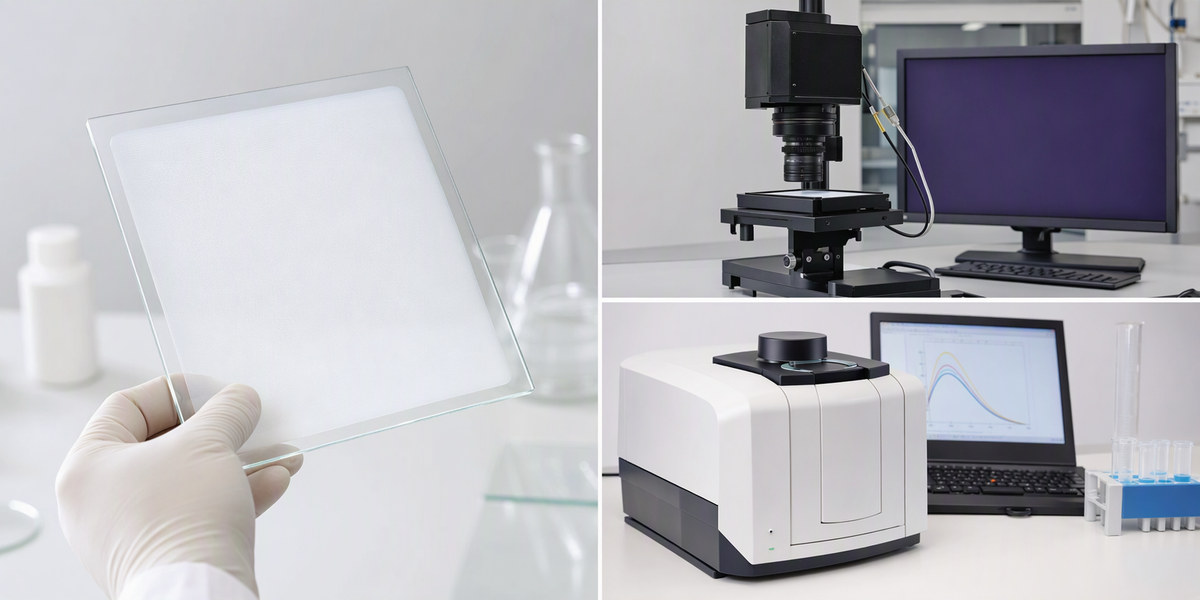
- Verification. Fineness-of-grind gauges, microscopy and particle-size distribution checks confirm the dispersion actually happened. These are worth writing into the specification as acceptance criteria.
Under-dispersed filter is a common cause of a mineral sunscreen that tests below its SPF target, feels gritty or films unevenly — and it is the cheapest failure to prevent.
How Do Concentration and SPF Relate?
SPF rises with filter loading, but not linearly. Past a certain point, adding more ZnO or TiO2 buys less protection while costing more in white cast and skin feel. What moves SPF in practice:
- Film uniformity. Protection depends on an even film at the tested application thickness; a well-dispersed moderate load often beats a poorly dispersed heavy one.
- Particle size distribution. Both the average size and its spread affect scattering efficiency across UVB and UVA.
- Vehicle and phase system. The base, emollients and film-formers decide how the filter distributes on skin.
So the practical answer to "how much is enough" is a development question: fix the target SPF, then optimize loading, grade selection and dispersion against it, instead of starting at the legal ceiling. What you can claim about that SPF, and how the number is tested, is covered in our SPF claims and testing article.
In the EU, the legal ceiling for both filters is 25%:
| Filter | EU max as sunscreen filter | Nano form | Format notes |
|---|---|---|---|
| Zinc oxide (ZnO) | 25% | Permitted up to 25% | Nano grade must not be used in formats that can lead to inhalation exposure — in practice, sprays |
| Titanium dioxide (TiO2) | 25% | Permitted up to 25%; TiO2 plus TiO2(nano) combined must stay at or below 25% | Same inhalation-exposure restriction for the nano grade |
| TiO2 powder | Powder containing 1% or more of particles with an aerodynamic diameter of 10 μm or less is classified as a category 2 carcinogen by inhalation | Annex III limits: loose face powder up to 25%, hair aerosol up to 1.4% (1.1% for professional use) | |
What Rules Apply to Nano Mineral Filters, and How Should They Be Labeled?
Nano ZnO and TiO2 are permitted in the EU up to the same 25% ceiling, with two practical conditions. First, they must not be used in products that can lead to inhalation exposure, which rules out sprayable formats. Second, the nano form must be declared in the ingredient list with a [nano] suffix, kept consistent with the product notification.
From the formulation side, nano grades are the standard answer to transparency: smaller particles scatter less visible light, so the film looks lighter on skin. The trade-off is that you are managing a material with its own regulatory conditions, grade documentation and labeling obligations. If a brief demands both sprayability and mineral filters, that combination is not available with the nano entries in the EU — a constraint to settle at the concept stage, not after artwork.
Two adjacent claims deserve care. "Reef safe" has no legal definition in the EU, so treat it as a marketing term the brand must substantiate itself, not a compliance conclusion. The ECHA process around octocrylene — a restriction proposal reported by ANSES in 2025, proposing a 0.001% cap with a consultation deadline of March 24, 2026 — is still a proposal, not law; do not build a launch timeline on it.
How Do You Control White Cast and Skin Feel?
White cast comes from visible light scattered by the filter film. The levers, roughly in order of impact:
- Grade selection. Coated grades and tuned particle-size distributions scatter less visible light; nano grades more so.
- Dispersion quality. Agglomerates are strong scatterers, so the same loading looks whiter when dispersion is poor.
- Filter blend. ZnO and TiO2 are often combined to balance UVA coverage against whiteness.
- Vehicle design. Oil and ester selection, plus film-formers, change how the film sits on skin; lighter emollients read less greasy under a heavy mineral load.
- Tint. Iron oxides shift the film toward skin tones — the standard route for tinted mineral sunscreens, and a claims conversation of its own.
Evaluate cast at the application thickness the testing method specifies, on more than one skin tone, against a benchmark the team agrees on: a film that looks acceptable in the beaker can still read chalky on skin.
Sunscreen Filter Lists Differ by Market — How Should You Plan for Export?
The EU’s Annex VI list is not a global passport. The US works from its own sunscreen monograph, the UK runs a retained version, and other markets maintain their own lists — a filter, a level or a labeling rule accepted in the EU is not automatically accepted elsewhere.
The practical sequence for an export-minded brand:
- Fix target markets first. Filter choice, maximum levels and nano conditions follow from the market list, not the other way around.
- Check each market’s list and limits per product. Levels legal in one market can be exceeded in another, and powder and aerosol formats carry their own limits, as the table above shows.
- Align labels and notifications. INCI names, [nano] suffixes and dossier data must match what you notify in each market.
- Keep one formula, several market dossiers. A single mineral base often travels well; what changes is documentation, labeling and claims per market.
Format interacts with all of this: a waterless or anhydrous format changes the dispersion phase and the stability questions, while a sprayable concept collides with the nano rules before it ever reaches the plant.
If your brief involves mineral filters, share the target SPF, format, positioning and target markets with our technical team. We can assess filter grades, the dispersion route and per-market documentation before sampling starts, so the white cast and regulatory questions get answered on the bench rather than after artwork.