When you develop a custom skincare formula with a contract manufacturer, two clauses decide whether that formula stays yours: confidentiality (keeping the formula, specs, and launch plan from leaking or being reused) and exclusivity (stopping the factory from making the same product for your competitors). Both only protect you if they are written specifically — a vague promise in an email does not hold up.
Why confidentiality matters in OEM/ODM
In a custom project the manufacturer sees almost everything: the full formula, the active levels, your raw-material suppliers, your cost structure, your packaging, and often your launch calendar. That information is what makes your product hard to copy, so the same partner that helps you build it is also the one most able to leak or reuse it. Confidentiality is not a formality; it is the core of the relationship.
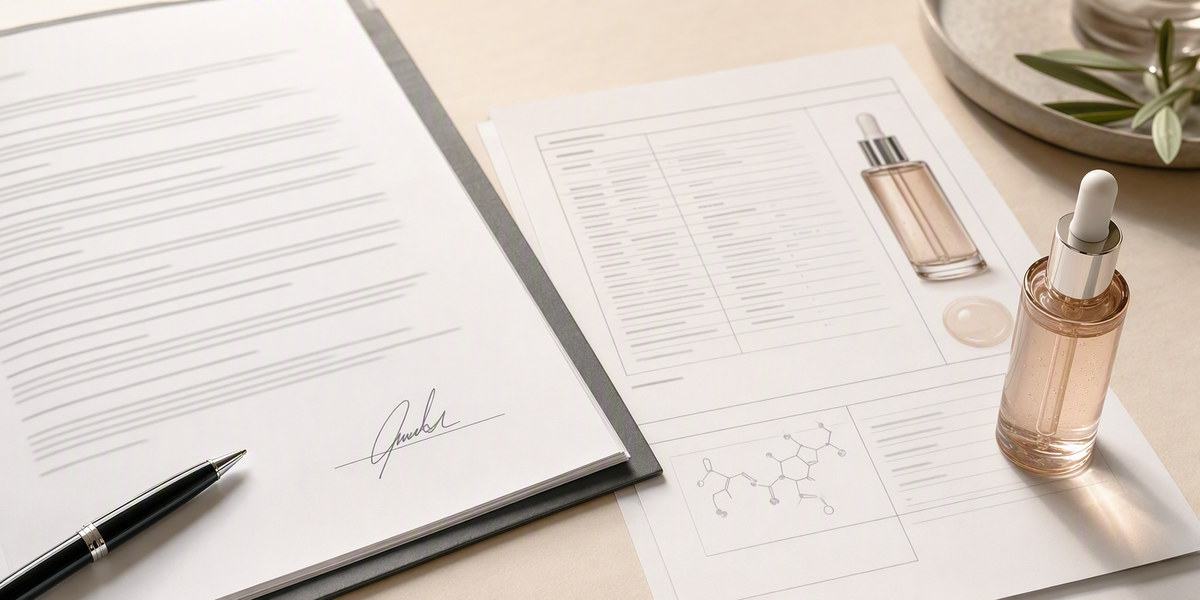
What a confidentiality clause should actually cover
A useful clause is specific about four things:
- Scope: formula, full specs, COA, supplier list, pricing, and the launch plan — not just the word "formula."
- Who else: the factory may need to share data with subcontractors or raw-material vendors; name them and require the same obligations downstream.
- Term: confidentiality should survive well after the project ends, not expire when production starts.
- Return or destroy: what happens to your documents and samples when the engagement ends.
How "exclusivity" breaks down — and what to specify
"Exclusive" is the most abused word in these negotiations. There are several distinct meanings, and you should pick the one you need:
| Type | What it blocks | Common loophole |
|---|---|---|
| Exclusive formula | The factory will not make this exact formula for others | They can make a "similar" formula and call it different |
| Exclusive SKU / product | This finished product is not made for other brands | They can sell the same formula under their own or another brand |
| Market / region exclusivity | No competing sales in your defined markets | Loopholes in how "market" and "competing" are defined |
| Exclusive raw-material supply | A key active is sourced only for you | The material is commodity; another buyer can get it too |
The fix is to define each term in writing: what counts as "the same" formula, which markets, which time window, and what happens on breach.
Practical safeguards beyond the contract
Clauses help, but structure helps more. Brands that protect formulas well often:
- Split the formula across more than one supplier so no single party holds the whole picture.
- Keep control of key or trademarked actives, and ship them to the factory as a base.
- Disclose the full formula only after signing, in stages, not on the first call.
- Reserve audit and batch-trace rights so you can verify what was actually made.
Red flags to watch
- The factory resists a proper NDA or wants to own the formula "as part of their library."
- They present a "standard" formula as custom and refuse to share the full spec.
- Exclusivity is offered only verbally, with no clause in the contract.
- They are vague about subcontractors who will touch your data.
How to set the terms without stalling the project
You do not need a forty-page legal document to get meaningful protection. Start with a one-page NDA before any formula exchange, keep the full specification under lock until the main contract is signed, and write the exclusivity scope into that contract rather than into a separate email thread. If a manufacturer refuses a basic NDA or insists on owning your formula as part of their library, treat that as a signal about how they handle other clients’ intellectual property, and weigh it against the convenience of working with them.
If you are about to brief a manufacturer on a custom line and want the confidentiality and exclusivity terms set clearly before you share the formula, our team can help you structure the agreement and the disclosure sequence.